Why it exists
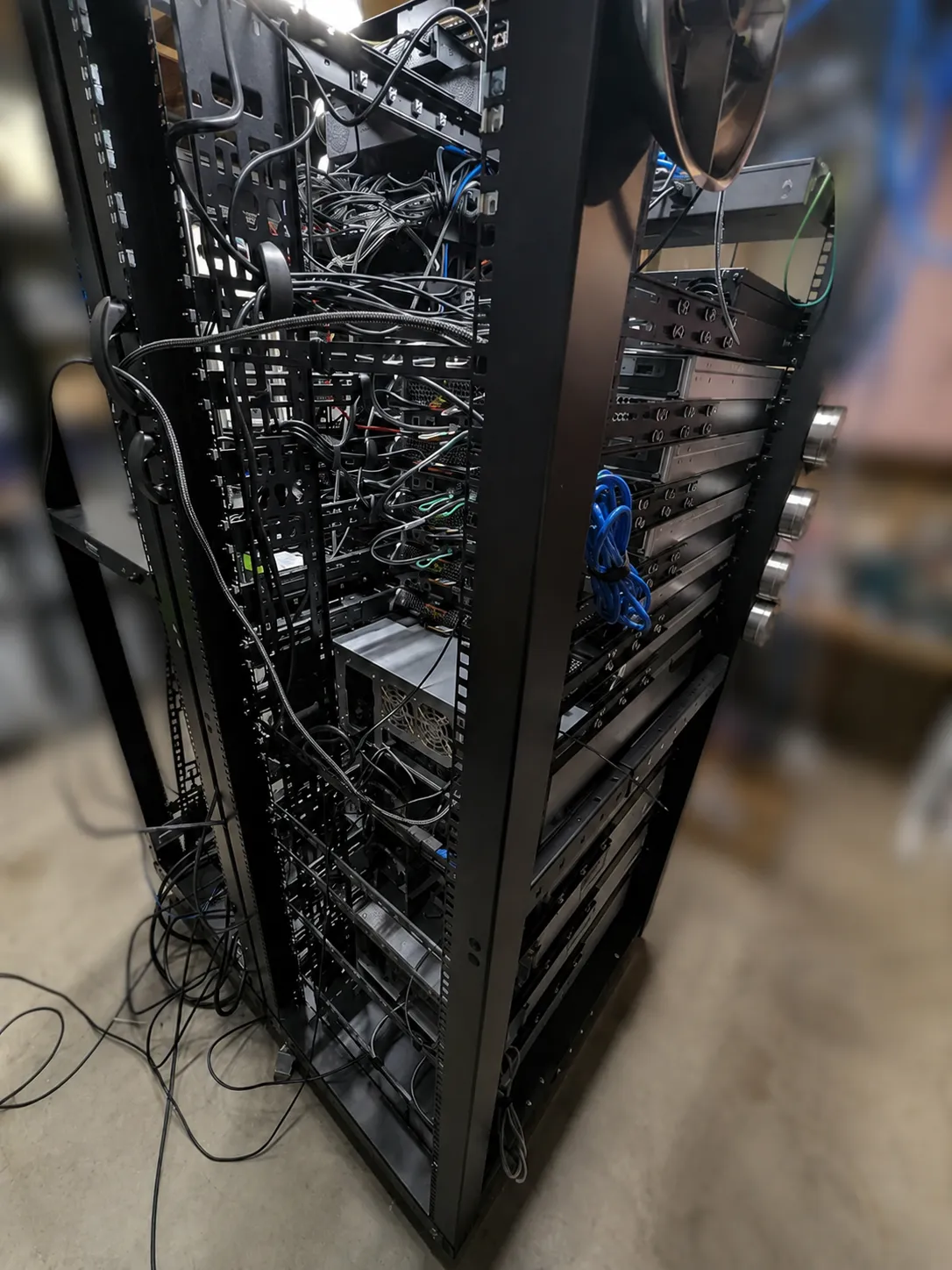
The rack in my basement is not a showroom installation. It is an operating platform for services my family uses, a place to centralize expensive compute, and a laboratory for infrastructure ideas that are easier to understand after running them for months.
Architecture
Proxmox hosts
    |
    +-- NixOS nodes
    |      |
    |      `-- k3s / Kubernetes / Helm workloads
    |
    `-- shared GPU and storage
             |
             `-- Games on Whales
                       |
                       `-- thin clients around the house
Pulumi and NixOS make the environment more reproducible. Kubernetes and Helm provide a consistent application layer. Monitoring and repeated rebuilds expose assumptions that are easy to miss in a one-off setup.
Games on Whales
Games on Whales is a Linux- and Docker-first system for running games and virtual desktops on shared hardware and streaming them to Moonlight-compatible clients. I use it to serve content from the basement rack to thin clients around the house and have contributed commits upstream.
It is highlighted here as an open-source dependency and contribution, not as a project I own.
Lessons
- Reproducibility matters more after the third rebuild than the first.
- Household users make reliability requirements concrete.
- Centralized compute can reduce duplicated hardware while increasing the importance of networking, observability, and graceful failure.